How to Create a Healing Ritual for When You Feel Stuck in a Life Decision
When you find yourself frozen between options—unable to move forward, unable to turn back—the stillness can feel like a kind of paralysis. But what if this停顿 is not a sign of weakness? What if it is, in fact, your inner compass asking you to slow down before you choose?
A healing ritual does not require hours, elaborate tools, or a perfect environment. It requires intention and a willingness to sit with yourself honestly. If you are currently navigating a significant decision and feel stuck, this guide offers a calm, step-by-step daily practice designed to ease transition stress, regulate emotional overwhelm, and restore the clarity you need to move forward with confidence.
The Psychology of Ritual in Transition
Decision paralysis during life transitions is not simply indecision. It is often a somatic response—your mind and body processing uncertainty, potential loss, and the weight of consequence before you consciously choose. Research in embodied cognition suggests that structured, repetitive actions help regulate the nervous system and reduce cortisol spikes during high-stress periods. When you perform a healing ritual, even a brief one, you signal to your body that you are safe to proceed.
Rituals work on a symbolic level too. They create a transitional space—a liminal zone where the old self and the emerging self can coexist without conflict. This symbolic function is why many cultures across history have used ritual to mark transitions: births, marriages, losses, and pivotal decisions. The ritual does not make the choice for you. Rather, it creates the internal conditions—calm, groundedness, and emotional permission—where a clearer choice becomes possible.
Understanding this psychological mechanism matters. You are not broken for feeling stuck. You are simply in a threshold moment, and threshold moments call for different tools than ordinary days.
Five Steps to Build Your Decision-Day Healing Ritual
The following practice is designed for daily use during any period of decision uncertainty. You can perform it in the morning before you check your phone, or in the evening when the noise of the day has quieted. Start where you are.
Step 1: Ground Your Physical Space
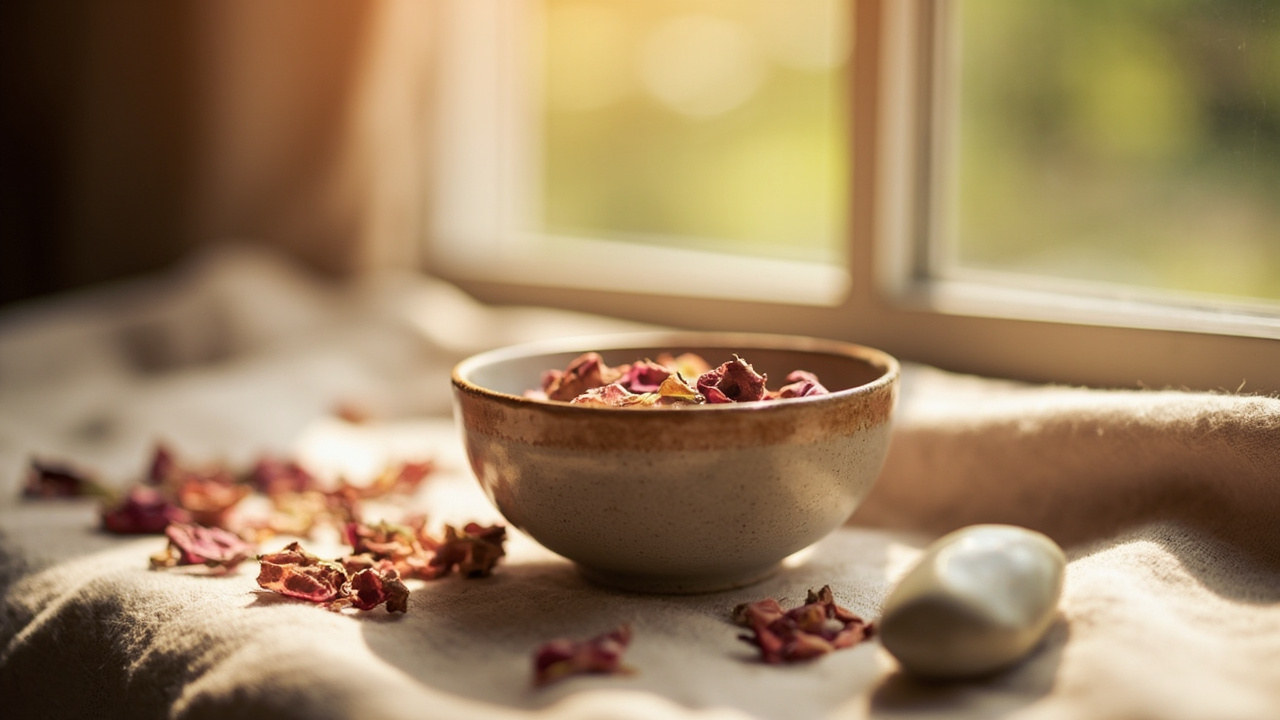
Choose a small surface—a desk corner, a bedside table, a windowsill—and clear it of clutter. Place a single candle, a small bowl, and one object that feels significant to you: a smooth stone, a pressed flower, a photograph. This does not need to be beautiful. It needs to be true to you. Light the candle. Let the flame be a reminder that you are present, that you are here, that this moment belongs to you.
Step 2: Name the Decision Without Judgment
Take three slow breaths. Then, in your own voice, say aloud or write in a notebook: "The decision I am facing is _______." You do not need to explain it or justify it. You only need to name it. This act of verbalization separates the decision from your identity. You are not the decision. You are the person standing before it.
Step 3: Identify What You Are Really Feeling
Often, what feels like indecision is actually unprocessed emotion—fear, grief, hope, or shame—sitting beneath the surface. Ask yourself: "What is the heaviest feeling I have about this choice?" Do not try to solve it. Simply notice it, the way you might notice a stranger passing on the street. Name it. "I feel afraid of choosing wrong." "I feel grief for the path I might leave behind." Let the feeling have space.
Step 4: Perform One Physical Release
Choose a single physical action that represents letting go or moving through. Options include: holding a cold glass of water until it warms, taking three slow breaths while pressing your feet firmly into the floor, writing one sentence about your fear and then folding the paper, or holding a stone in each hand, then setting one down deliberately. The specific action matters less than the intentionality behind it. You are performing release, not forcing resolution.
Step 5: Close with a Brief Affirmation
Speak quietly or think silently: "I am allowed to take time. I am allowed to feel uncertain. I will return to this decision from a place of calm." You do not need to believe these words perfectly. You only need to say them. Repetition builds new neural pathways over time. Consistency is more powerful than conviction in these early stages.
Key Ritual Elements for Transition Decisions
Each element of this healing ritual serves a symbolic function. Understanding why these elements matter can help you adapt the practice to your own needs as you move forward.
- The candle: Fire represents transformation and the passage of time. Watching a flame can quiet a racing mind in a way that screens cannot.
- The stone or object: A physical anchor gives your hands something to hold, which regulates the nervous system through haptic feedback. Choose something that fits naturally in your palm.
- Breath: Controlled breathing activates the parasympathetic nervous system. You do not need deep breathing—steady, deliberate breaths are enough.
- Naming aloud: Vocalizing internal states externalizes them, which reduces their grip on your conscious mind. You do not need to speak loudly or to anyone. You only need to hear yourself.
- The affirmation: Even neutral statements ("I am in the middle of this") can interrupt the spiral of "I should already know what to do." Permission to be uncertain is itself a form of healing.
These elements work in combination because they address both the psychological and somatic dimensions of being stuck. You are not just thinking your way through transition stress. You are creating a felt experience of safety and steadiness.
Frequently Asked Questions
When should I start a healing ritual if I feel stuck in a life decision?
Begin the moment you notice the paralysis—not when you have "enough information" or "feel ready." The ritual is not a reward for readiness. It is a tool for creating readiness. Starting early, even when the stuck feeling is mild, prevents emotional buildup and gives you a practiced method before the stress escalates.
Can a short daily ritual actually help reduce transition stress and indecision?
Yes. Consistency matters more than duration. A five-minute daily practice builds cumulative benefit over weeks. The ritual functions like emotional hygiene—small maintenance that prevents larger overwhelm. Many readers find that after two to three weeks of daily practice, decision-related anxiety decreases noticeably.
How do I know if my healing ritual is working during a difficult transition?
Signs include: reduced physical tension in your chest or shoulders, fewer intrusive thoughts about the decision at night, a growing sense that you can examine the options without panic, and an increased ability to name what you want rather than only what you fear. Progress is not dramatic. It is quiet. Look for internal permission to breathe, and for moments where you feel less trapped by the decision.
When is the right time to seek private spiritual guidance for a life decision I cannot make alone?
If you have practiced daily rituals for several weeks and still feel that your internal compass is not clarifying, that is a valid signal to seek outside support. Other indicators include: recurring dreams or symbols that feel significant but unexplained, persistent physical symptoms with no medical cause, or a sense that the decision involves not just practical outcomes but existential weight. Private spiritual guidance can help you read the symbolic landscape of your transition with more precision than self-guided practice allows.
Moving Forward with Clarity
Life decisions—whether they involve career, relationships, location, or identity—are rarely resolved by more information alone. They require internal conditions that allow wisdom to surface. A daily healing ritual builds those conditions gradually, without demanding immediate answers.
If you have been searching for a way to cope with transition stress, to ease the weight of an unresolved choice, or to begin honoring the wisdom that exists beneath your uncertainty, this practice is a starting point. It is available to you now, without appointment or preparation.
For deeper, personalized support—particularly if you are navigating a decision that feels too large to hold alone—consider exploring private spiritual guidance through Oblivia's one-on-one practice. You can learn more here: [https://alchemy.oblivia.cc/mena/private](https://alchemy.oblivia.cc/mena/private).
For additional healing ritual practices and articles on navigating transition with grace, visit: [https://alchemy.oblivia.cc/mena/healing](https://alchemy.oblivia.cc/mena/healing).